



Hiking Boots vs. Hiking Shoes
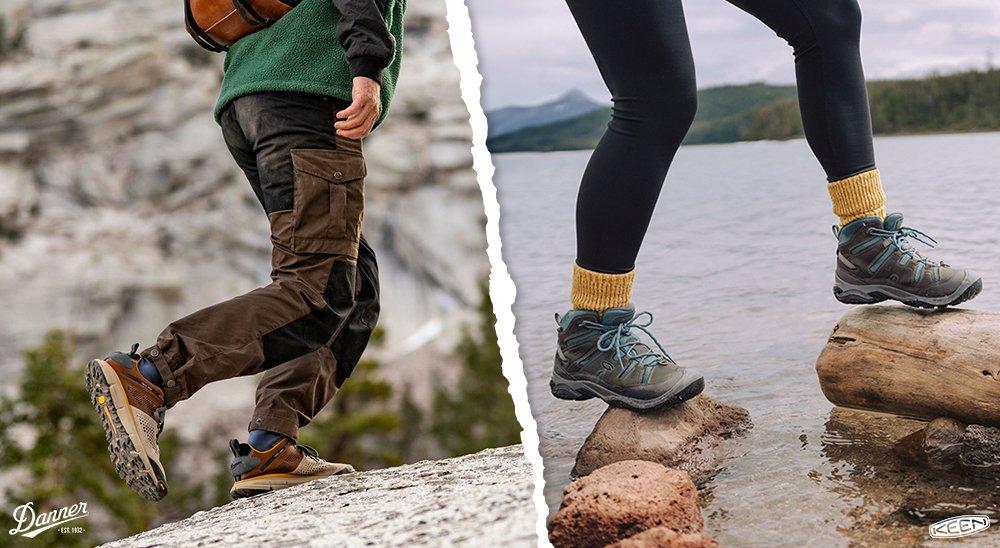
When it comes to taking on the trails and enjoying your outdoor adventure, wearing the right hiking footwear is key. With a variety of options including boots, shoes, and trail runners, knowing which type best suits your adventure is important. Our Footwear Experts explain the differences between hiking boots and hiking shoes so you can make the right choice for your needs and preferences.
At a Glance: Hiking Boots vs. Hiking Shoes
Many customers wonder which is better: hiking boots or hiking shoes. Neither is better than the other, but rather each offers different features and benefits when taking on the trails.
Consider Hiking Boots If:
-
You need more ankle stability
-
You are carrying a heavy load
-
You hike for long distances or multiple days
-
You're hiking a technical trail with rocky terrain and other hazards
Consider Hiking Shoes If:
-
You enjoy day hikes
-
You want greater ankle mobility
-
You want a more breathable, lightweight feel
-
You want versatility for a range of outdoor activities
Deep Dive: About Hiking Boots
Hiking boots are built for those who enjoy backpacking on technical terrain. They are designed to provide stability, ankle support, and extra protection in a variety of weather conditions.
Our Footwear Experts outline the features that set hiking boots apart from hiking shoes:
-
Durable & Enhanced Protection: Typically made from leather, the upper is durable for long-lasting use and enhanced protection from trail debris.
-
Ankle Support: The high-cut upper ensures your ankle is supported and covered to prevent sprains or injuries when navigating challenging terrain.
-
Waterproof Technology: Most hiking boots feature a GORE-TEX membrane or similar technology to offer waterproof yet breathable protection in wet conditions.
-
Stability Shank: Many hiking boots feature a shank, making them feel stiff. This is to provide greater stability on unpredictable trails.
-
Lugged Outsole: Compared to hiking shoes, boots feature more aggressive, grippy outsoles with deeper lugs to grip the terrain and shed mud.
-
Plenty of Break-In Time: Hiking boots require a much longer break-in period compared to hiking shoes because they are made from stiffer, more durable materials.
Hiking boots are built to give hikers the best protection and support across challenging terrain. These boots give maximum ankle support, usually have a waterproof exterior, and made for heavy use.
- Alyssa, SCHEELS Expert
Deep Dive: About Hiking Shoes
Hiking shoes are built for those who enjoy day hikes on maintained or rugged terrain. They are designed to be lighter-weight and more versatile, making them great to wear from the trail to the pavement.
Our Footwear Experts outline the features that set hiking shoes apart from hiking boots:
-
Lighter: Hiking shoes are lighter compared to hiking boots, making them great for day hikes or other activities where you need to more quickly.
-
Low-Cut Upper: With the lower-cut design, you'll enjoy greater agility and ankle mobility compared to hiking boots.
-
More Breathable: Many hiking shoes feature engineered mesh within the upper, making them more breathable and a better choice if hiking in hot weather conditions.
-
Moderate Protection: Features like the toe cap, midsole cushioning, and aggressive lugged outsole, provide hikers with moderate protection and traction.
-
More Versatile: With the features and design, hiking shoes are often worn for a variety of outdoor activities from hiking to everyday casual wear.
-
Waterproof Technology: Similar to hiking boots, many hiking shoes offer waterproof yet breathable protection thanks to a membrane made from GORE-TEX or similar proprietary technology.
-
Some Break-In Needed: Because of the upper materials, hiking shoes don't require nearly as much break-in time compared to hiking boots.
Hiking shoes are a great compromise, offering lighter weight than boots and giving you options for your preferred level of support, waterproofness, and ankle protection.
- Alyssa, SCHEELS Expert
The choice between hiking boots and hiking shoes comes down to your personal preferences and where you'll be hiking. If you have additional questions about which type of hiking footwear works best for you, stop into your local SCHEELS to speak with a Footwear Expert.